
I was just beginning to explore the concept of health monitoring or self-quantifying back in 2013 when I wrote about my use of the Fitbit Flex. I was hoping that the device would, if nothing else, remind me how little I move.
A dozen years later and I’m still using technology for the same purpose: not for “fitness” but as a reminder to get up and go at least a little bit or, in some cases, to lie down and sleep. I thought it might be interesting to talk about what I’ve used in the intervening decade for that purpose.
Apple Watch
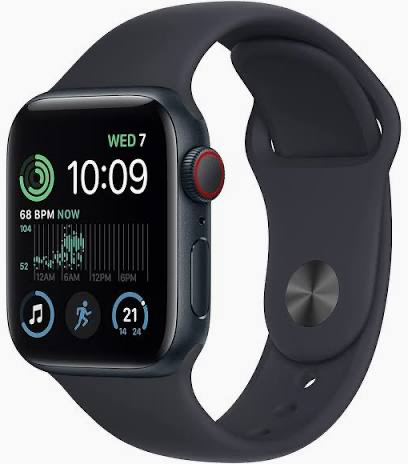
The first major change after the Fitbit Flex was a move to the Apple Watch. This is a night and day changeover: the Apple Watch is a fully realized computing device that runs its own apps and has a collection of more sophisticated sensors, most notably a blood oxygen sensor.
I found the tracking provided by the Apple Watch to be more than sufficient. It even helped me detect illnesses apparent through increased heart rate during a couple of motorycle road trips I went on. The oxygen sensor was a great boon during COVID as it allowed me to do a quick check to see if I was still in the normal range of healthy oxygenation.
But the Apple Watch has three downsides that impacted me: Firstly, it is a watch and occupies all the space where I might wear a mechanical watch which is on my left wrist where all watches belong to my way of thinking. Secondly, the Apple Watch is a complex computing device which keeps wanting to tell me things that aren’t related to health monitoring. Some of these are interesting things like the weather, others are less so like advertising and certain redundant notifications.
Thirdly, and arguably most importantly for my next section, the Apple Watch cannot practically run for multiple days without recharging. It barely makes it through a day in its current incarnations, which means that sleep monitoring is dependent on the human owner remembering to recharge the thing well in advance of sleep time, during which interval they are denuded of their wrist based computing device.
Oura ring
I had a mental breakdown this past December, and it changed a number of things for me. One key consideration is my relationship with sleep. It is very important if not critical for a person with mania to establish and maintain regular sleep cycles of seven or eight hours per night. Tracking the quality of this sleep is highly desirable.
The Apple Watch was not a good tool for me to track sleep. As I note in the previous section, a fully charged Apple Watch barely survives a day let alone covering night time as well, and taking it off to recharge it is both a memory challenge and limits the day-time usefulness of the device. So I opted for something different.
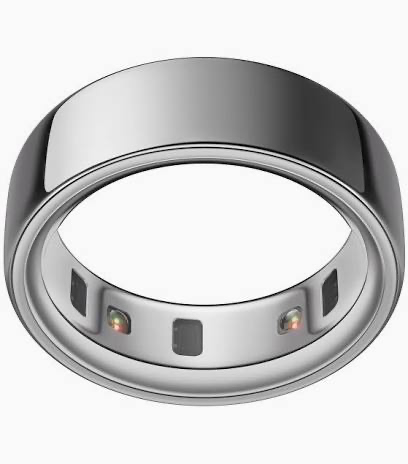
I looked at the available technologies and settled on an Oura ring as my new tracking device. I wear it on the ring finger of my right hand and, although it is a bit bulky for my preferences, it works reliably. The Oura retains a charge for about a week and takes about 20 minutes to recharge. The Oura has pretty much the same sensor suite as the Apple Watch just in a ring-sized package without any kind of display. You use your phone to see your health metrics, and sleep quality is well represented in the statistics.
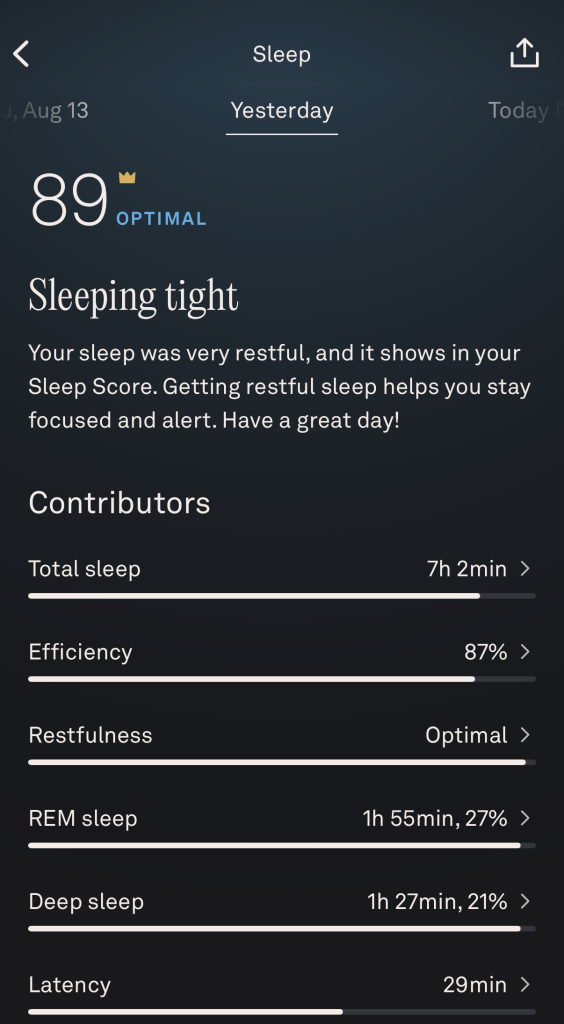
Sleep is broken down into factors like REM versus light or deep sleep, and other considerations like latency (time to fall asleep) are also considered. All of this is calculated without intervention: I don’t know how exactly it tells my “sitting on the couch doing nothing” time from my “lying in bed trying to fall asleep” time, but it does a fairly good job doing so. I average about 7 hours of total sleep per day with an estimated time in bed of about 8.5 hours: since I fall asleep faster than what this reflects I have to assume some of my immobile time is being counted as time in bed, but that is pretty good overall. The Oura combines all of these factors into a 1-100 sleep score as it does with other health metrics.
The Oura does a good job being unobtrusive and just performing the task for which I acquired it. I might one day switch back to wearing an Apple Watch in place of the mechanical watch that now has pride of place on my wrist, but for now my instrumentation is the Oura ring.
So, is all this tech keeping you healthy? Or just giving you detailed monitoring of your inevitable decline? 😉
Detailed monitoring of my inevitable decline, Chris. Currently I just use the Oura ring and it keeps track of my sleep. If I notice I have a deficit then I try to get in a nap which seems to help.
But I wouldn’t say it “makes me healthy” any more than a thermometer makes the weather better: it is just a monitor.